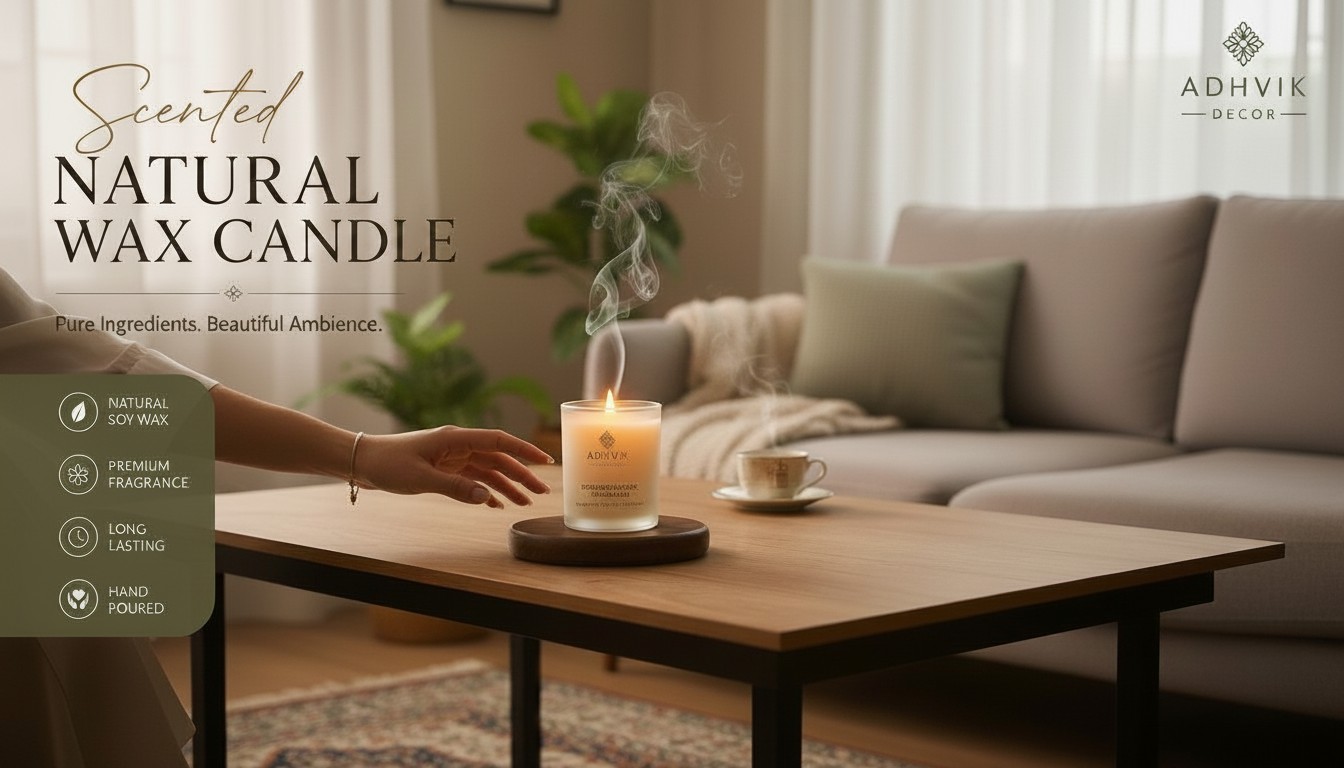
Every great candle starts with the right wax base. For scented natural wax candles, the most common options are soy wax, beeswax, and other plant-based blends — each with its own melting point, burn time, and scent-throw characteristics. Soy wax burns clean and slow, beeswax offers a naturally sweet aroma, and blended natural waxes strike a balance between the two. Many manufacturers use tiered wax blends to balance cost, burn quality, and customer expectations, especially when producing candles across different price points.
The wax is melted slowly in a double-boiler or dedicated melting tank, heated to a precise temperature — usually between 60°C and 80°C depending on the wax type. Getting this temperature right is critical; too hot, and the fragrance oils burn off before they're even added, too cool, and the wax won't blend properly with additives.
Once the wax reaches the correct pouring temperature, fragrance oils are added. This is where scented natural wax candles really start to take on their identity. Fragrance load — the percentage of oil relative to wax — typically ranges between 6% and 10%, though this varies based on the wax type and desired scent strength. Add too little, and the candle will be faint once burning; add too much, and it can affect how cleanly the wax burns or cause the fragrance to separate.
Dye chips or liquid colorants are stirred in next, if the candle calls for color. This step requires a practiced eye, since wax color can shift slightly as it cools and cures
While the wax cools slightly, the container is prepped. The wick — usually cotton or wood, sized according to the diameter of the container — is secured at the base using a small metal sustainer or adhesive dot, then centered using a wick holder or clip. Wick selection is one of the most technical parts of candle making: too thin, and the candle will tunnel instead of burning evenly across the surface; too thick, and it can smoke or burn too hot.
With the wax cooled to the ideal pouring temperature (typically 50–55°C for most blends), it's poured slowly into the prepared containers. Pouring temperature affects the final finish — pour too hot, and you risk cracking or frosting; pour too cool, and you may see uneven surfaces or poor adhesion to the glass. For layered or multi-scent candles, this step is repeated in stages, allowing each layer to partially set before the next is poured.
This is the step patience is built on. Freshly poured candles need to cool undisturbed at room temperature, away from drafts or temperature swings, which can cause sinkholes or uneven tops. But cooling is just the beginning — candles also need to cure for several days (often 1–2 weeks) before they're ready to burn. Curing allows the fragrance oil to fully bind with the wax, resulting in a stronger, more consistent scent throw once lit.
Once cured, the wick is trimmed to about a quarter-inch, and any surface imperfections are smoothed or topped off with a second wax pour if needed. Each candle then goes through a quality check — inspecting for even color, proper wick centering, and a clean, bubble-free surface — before it's ready for labeling and packaging.
The final step is often what customers notice first. Thoughtful packaging — whether a minimalist kraft box, a decorative tin, or a gift-ready set — protects the candle and reinforces the brand experience. For businesses producing at scale, this stage also involves batch labeling with burn instructions, safety information, and fragrance notes.
Candle making might look simple from the outside, but every stage — wax selection, fragrance ratio, wick sizing, pour temperature, and cure time — directly affects how a candle performs in someone's home. Well-made scented natural wax candles burn evenly, throw fragrance consistently, and last as long as they promise. That consistency is what separates a candle that's simply decorative from one that becomes a customer's favorite.
Whether you're lighting a candle for a quiet evening or gifting one to someone special, there's a whole process behind that first flicker — one built on precision, patience, and a genuine love for the craft.